Thứ bảy, ngày 6 tháng 12 năm 2025 11:06 SA

The Four Noble Truths

v

Preface

to the Eleventh Edition

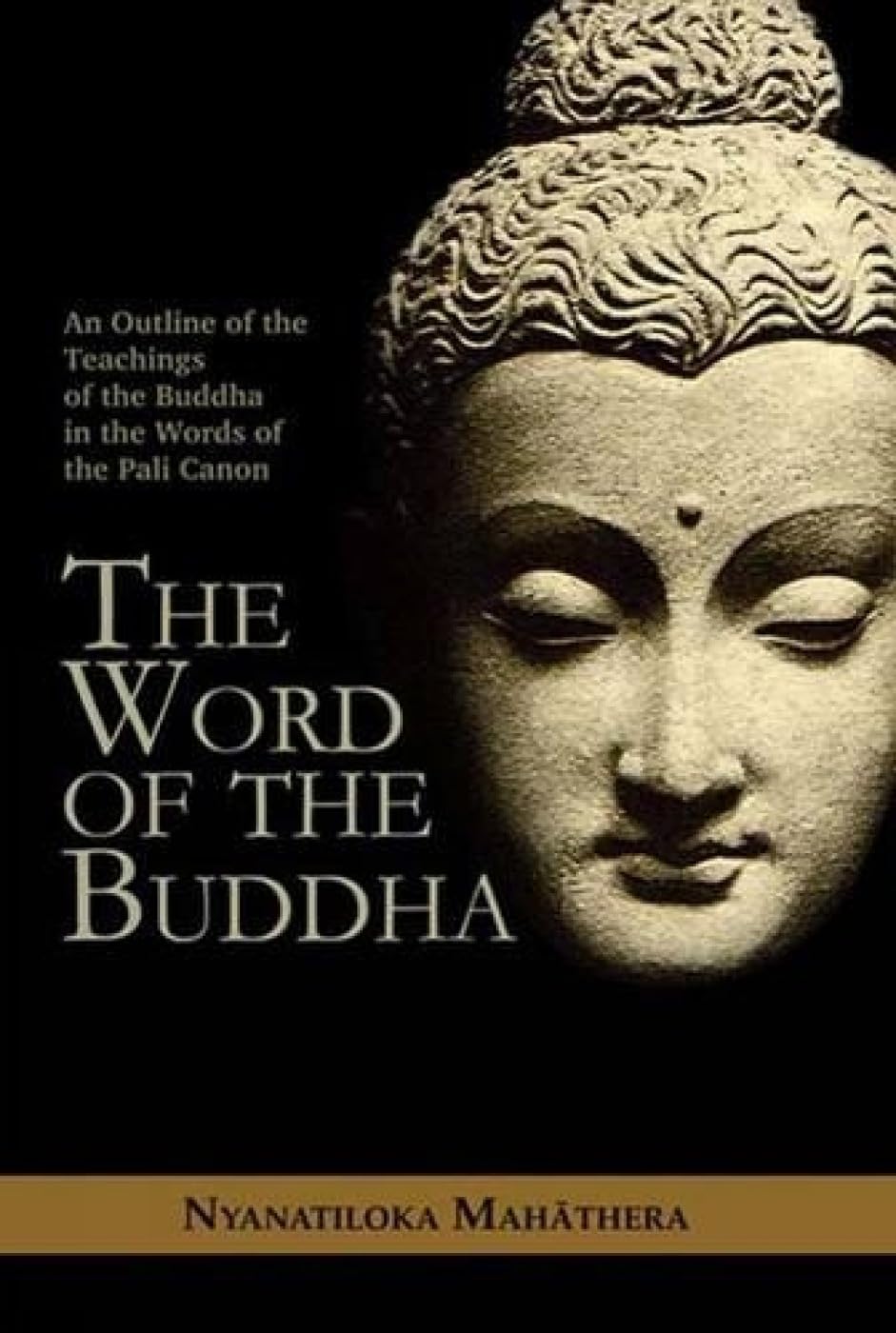
The Word of the Buddha , published originally in German, was the first strictly systematic exposition of all the main tenets of the Buddha’s teachings presented in the Master’s own words as found in the Sutta Piṭaka of the Buddhist Páli Canon.

While it may well serve as a first introduction for the beginner, its chief aim is to give the reader who is already more or less acquainted with the fundamental ideas of Buddhism, a clear, concise, and authentic summary of its various doctrines, within the framework of the all-embracing Four Noble Truths, i.e., the truths of suffering (inherent in all existence), its origin, its extinction, and the way leading to its extinction. From the book itself it will be seen how the teachings of the Buddha all ultimately converge upon the one final goal: deliverance from suffering. It was for this reason that on the title page of the first German edition there was printed the passage from the Aṁguttara Nikáya which says:

Not only the fact of suffering do I teach, but also deliverance from it.

The texts, translated from the original Páli, have been se- lected from the five great collections of discourses which form the Sutta Piṭaka. They have been grouped and explained in such a manner as to form one connected whole. Thus the col- lection, originally compiled for the author’s own guidance and orientation in the many voluminous books of the Sutta Piṭaka,

v

vi The Word of the Buddha

will prove a reliable guide for students of Buddhism. It should relieve them from the necessity of working their way through all these manifold Páli scriptures, enabling them to acquire a comprehensive and clear view of the whole; and it should help them to relate to the main body of the doctrine the many details they will encounter in subsequent studies.

As the book contains many definitions and explanations of important doctrinal terms together with their Páli equiva- lents, it can serve as a book of reference and a helpful com- panion throughout one’s study of the Buddha’s doctrine.

After the first German edition appeared in 1906, the first English version was published in 1907, and this has since run to ten editions, including an abridged students’ edition (Colombo: YMBA, 1948) and an American edition (Santa Barbara, California: J.F. Rowny Press, 1950). It has also been included in Dwight Goddard’s Buddhist Bible , published in the United States.

Besides subsequent German editions, translations have been published in French, Italian, Czech, Finnish, Russian, Japanese, Hindi, Bengali, and Sinhalese. The original Páli of the translated passages was published in Sinhalese charac- ters (edited by the author, under the title Sacca-Saògaha , Colombo, 1914) and Devanágarì script in India.

The eleventh edition has been revised throughout. Addi- tions have been made to the Introduction and to the explana- tory notes, and some texts have been added.

N yanatiloka

Trích dẫn

Vườn Sala

Quỹ thiện nguyện Vườn Sala